The Closed-Sign Test: Brand Judgement in the Unbriefed Hours
A campaign has a beginning, a middle and a report. It is planned in decks, approved in meetings and measured against a dashboard. Then the launch window closes, the media budget runs down and the creative team moves to the next brief. The brand, however, does not stop. It keeps meeting people at 7.42pm on a Sunday, on a bank holiday Monday, during a rail replacement service, in the quiet week between Christmas and New Year, and at the moment a customer types the wrong URL. These are the unbriefed hours, and they deserve more attention than they usually receive.
The Hours the Brief Forgets
The after-hours brand is not a lesser version of the main brand. It is often the version people trust most, because it arrives without fanfare. A launch campaign is understood as persuasion. An out-of-office reply, a delivery notification or a closed-sign notice feels like fact. The customer is not admiring the art direction; they are trying to complete a task, understand a delay or find out when the shop will open again. In those moments, the brand is judged on clarity, courtesy and whether it behaves like the same organisation it claimed to be in the campaign.
This matters particularly in the UK, where much brand contact happens in the gaps between formal service hours. A customer may order on a Friday evening and hear nothing until Monday. A visitor may reach a 404 page while the office is closed. A caller may meet a voicemail message that was recorded years ago and never revisited. None of these touchpoints tend to sit with the brand team. They sit with operations, IT, logistics, front-of-house staff or an agency retained for web maintenance. That is precisely why they are revealing. They show whether the brand is a living system or a performance confined to the campaign calendar.
Five Places to Look First
Most organisations do not need a vast audit to find the unbriefed hours. They need to look where the brief rarely goes.
Out-of-office replies. These are small pieces of writing with a large job: they manage expectation. A useful reply says when the person will return, who can help in the meantime and what the sender should do if the matter is urgent. It does not need to be witty. It needs to sound like the organisation and respect the reader's time.
Error pages. A 404 page is a moment of mild failure. The brand can either compound it with a dead end or reduce it with a clear route back. The best error pages are not clever for the sake of it. They acknowledge the problem, offer the most likely next steps and keep the visual language familiar.
Delivery updates. In ecommerce, these messages carry more brand weight than many display ads. They are read with attention because they answer a practical question: where is my order? Precision is a form of respect. So is consistency in naming, timing and tone across email, SMS and tracking pages.
Voicemail messages. A recorded greeting is often the first human-sounding contact a caller receives. If it is muffled, outdated or oddly cheerful about a serious service issue, the mismatch is felt. A short, clear message with opening hours and an alternative route is usually stronger than a lengthy script.
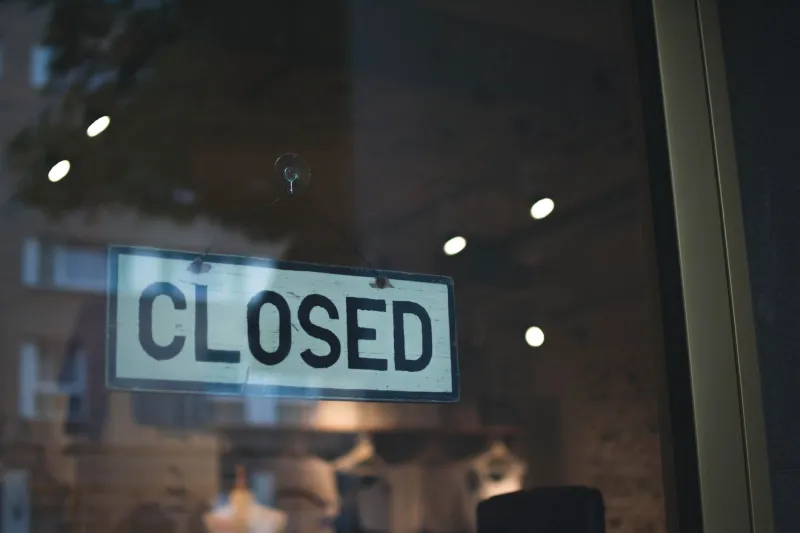
Closed-sign copy. On the UK high street, the handwritten or printed closed sign is a tiny brand asset. It can be a scrawled note that suggests disorder or a considered line that confirms the organisation is run with care. The same applies to temporary notices about refurbishment, seasonal hours or unexpected closure.
Why These Moments Carry More Weight Than They Seem
Expectation shapes judgement. When a customer meets a campaign, they expect persuasion and make allowances for it. When they meet an after-hours touchpoint, they expect service and interpret what they find as the truth of the organisation. A warm, well-written out-of-office reply can make a small business feel more established. A careless delivery update can make a large retailer feel less reliable than its advertising suggested. The unbriefed hours are where the brand stops performing and starts behaving.
There is also a matter of repetition. Campaigns come and go, but operational messages are encountered again and again. A customer may see a delivery update for every order, a voicemail for every call, a closed sign for every early arrival. Repetition turns small details into a brand impression. If those details are inconsistent, the inconsistency becomes the impression.
A Simple After-Hours Audit
An after-hours audit does not need to be complicated. It needs to be honest and repeatable.
- Map the unbriefed hours. List the touchpoints a customer can meet outside normal working time, including weekends, bank holidays, seasonal closures and service disruptions. Include digital, telephone, physical and logistics moments.
- Read them as a customer. Gather screenshots, call the main number, test a broken link, review a delivery notification and photograph the closed sign. Do not read them as the person who wrote them.
- Check for recognisability, not repetition. The after-hours voice need not match the campaign line for line. It should share the same principles: clear, courteous, useful and recognisably from the same organisation.
- Assign ownership. Decide who writes and approves these messages. Provide templates for common situations, but allow enough flexibility for staff to be human when the situation calls for it.
- Set a review rhythm. Revisit the audit after major campaigns, seasonal peaks, website changes and service incidents. The after-hours brand drifts quietly unless someone is listening.
- Define the minimum standard. At the very least, every after-hours touchpoint should identify the organisation, explain what is happening, offer a next step and provide a route to human help where possible.
The Difference Between Polish and Presence
This is not an argument for turning every automated message into a piece of campaign creative. Over-produced after-hours touchpoints can feel worse than plain ones. A delivery update does not need a joke. A voicemail does not need a brand manifesto. A closed sign does not need a slogan. What these moments need is presence: the sense that someone considered the person on the other side of the message.
At Clock Creative, we often return to the idea that good brand work keeps perfect time. That does not mean it is always loud. It means it is present at the right moment, in the right register, without requiring a launch to justify itself. The after-hours brand is the quiet proof of that principle. It is where the campaign clock stops and the reputation clock keeps going.
The Clock Keeps Running
The launch is not the whole story of a brand. The unbriefed hours are where customers test whether the story holds. A simple audit of out-of-office replies, error pages, delivery updates, voicemail and closed-sign copy can reveal more about an organisation than another round of campaign analysis. The aim is not to shame the people who wrote those messages in haste. It is to bring them into the brand system, give them the attention they deserve and make sure that when nobody is briefing, the brand is still behaving like itself.