The Wound Clock: Why UK Heritage Brands Must Earn Their Trust Again
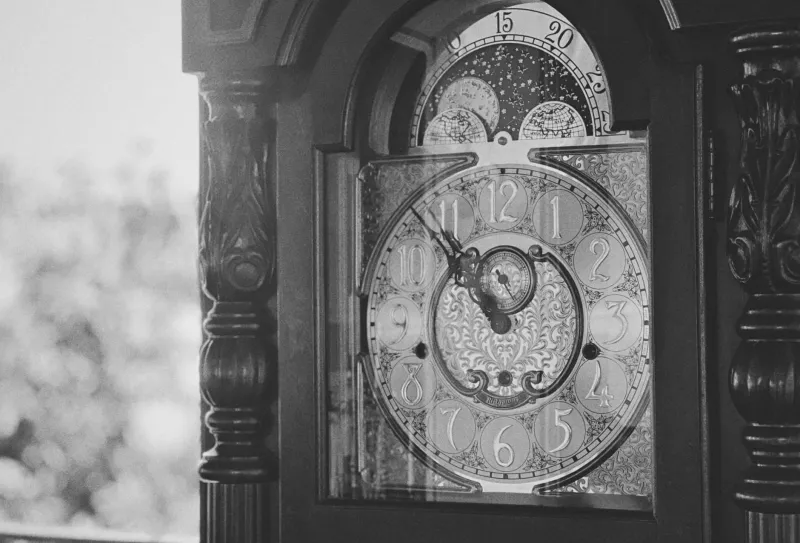
A grandfather clock is not trusted because it is old. It is trusted because it still keeps time. The same distinction should govern how UK heritage brands think about longevity. Age may explain where a business came from, but it does not, by itself, explain why anyone should choose it now. In 2026, provenance is plentiful and easy to claim. Relevance is harder to manufacture.
The Difference Between Age and Authority
Longevity is evidence of survival, not proof of contemporary value. A brand founded in 1847 may have earned a measure of respect, but respect is not the same as preference. It can open a door; it cannot carry a conversation. Too often, heritage brands treat their founding date as a strategic argument when it is really a biographical detail.
The commercial risk is subtle. A firm becomes accustomed to being known, then mistakes being known for being chosen. It invests in the retelling of origin stories while the product, service and digital experience drift out of step with the market. The clock still stands in the hall, but nobody has checked whether it is keeping time.
Heritage can be a powerful brand asset. It can signal durability, craft, consistency and local rootedness. But those qualities have to be demonstrated in the present tense. A customer cannot buy a nineteenth-century reputation. They can only buy what the brand does for them today.
When Provenance Becomes Decoration
The warning signs are rarely dramatic. They appear as habits: the founding date placed on every deck; the sepia photography used to imply quality; the phrase “crafted since” doing more work than the product itself. Heritage becomes decoration when it is asked to perform a role that the rest of the brand has stopped performing.
There is a particular UK temptation here. We are good at preserving institutions, and we are often sentimental about them. That instinct has commercial value, but it can also encourage a kind of reverence that substitutes for invention. A brand can become a listed building: admired, protected and increasingly difficult to live in.
The test is simple. If the heritage story were removed, would the brand still have a clear reason to exist for its customers? If the answer is no, then provenance is not a strategy. It is a disguise.
The Winding Audit: Six Questions for Heritage Brands
A useful audit should be practical rather than nostalgic. Think of it as winding the clock: checking the mechanism, not admiring the case.
1. Would the brand be recognised without its founding date?
Remove the year from the website, the packaging and the pitch. What remains? If the answer is only a generic promise of quality, the brand has not yet converted history into meaning.
2. What does provenance prove in practice?
Heritage should connect to something operational: materials, repair, guarantee, supply chain, training or service. A story about longevity is stronger when it explains why the product lasts, how it is maintained or what the brand still makes possible.
3. Which assets are inherited, and which have been chosen?
A typeface, colour or symbol may be inherited, but it still has to earn its place. Heritage brands often protect old assets long after they have stopped communicating anything useful. Preservation is not the same as care.
4. Can the story be told in the present tense?
Try rewriting the brand narrative without the words “heritage”, “tradition” or “since”. If the story collapses, it was a history lesson rather than a brand proposition.
5. Where does provenance appear in the customer journey?
If history only appears on the about page, it is unlikely to be doing commercial work. It should inform product design, service language, retail experience and campaign ideas. Otherwise it is a footnote, not a foundation.
6. What would be lost if the date disappeared?
This is the removal test. If the answer is merely reassurance, the brand may be relying on inherited trust rather than earned relevance. If the answer is a distinctive way of seeing the category, heritage is doing real work.
History as Present-Tense Energy
The strongest heritage brands do not ask customers to admire the past. They use the past to solve a present problem. Barbour has kept its waxed jacket in conversation through repair services, collaborations and a clear product truth rather than treating the archive as a sealed room. Burberry has repeatedly returned to the trench coat not as a relic but as a living form that can be reinterpreted. Marmite has turned an inherited, polarising taste into a present-tense campaign device: the history matters because it gives the brand a distinctive argument now.
These examples share a discipline. They do not merely display provenance; they translate it. The past is not the message. It is the material from which a contemporary message is made.
The Discipline of Staying Relevant
A grandfather clock needs winding, regulation and occasional cleaning. Heritage brands need the same maintenance. Reputation accumulates, but relevance has to be renewed. That work is creative, not custodial. It requires the confidence to edit inherited assumptions and the humility to ask whether the brand is still useful.
At Clock Creative, we would rather ask a harder question than celebrate a longer history. What is this brand doing now that could only be done with this past behind it? That is the difference between inheritance and authority. The past can be an asset, but only when it is wound into the present.