When the Usual Route Stops: A Brand Voice Plan for Service Interruptions
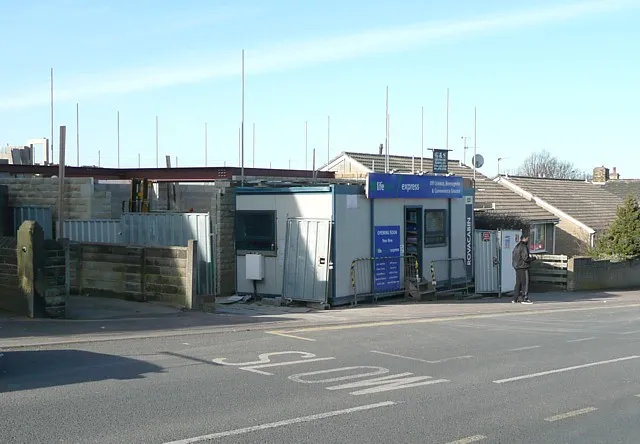
Photo: Humphrey Bolton, CC BY-SA 2.0, via Wikimedia Commons
Disruption is an honest test of a brand. When the website falls over, the delivery slips, the flagship closes or the payment fails, the usual service disappears. What remains is a set of substitute touchpoints: an error page, a holding email, a temporary sign on a door, a social reply, a member of staff explaining what cannot be done. These are the replacement buses of brand experience. They are rarely the service anyone wanted, but they still have to get people home.
The common mistake is to treat these moments as technical exceptions rather than brand moments. The result is language that is either sterile or over-apologetic. A grey page says 'something went wrong'. An email says 'we are experiencing high volumes'. A door sign says 'closed until further notice'. None of these is false, but none of them carries the brand. In the moment when customers most need orientation, the brand goes missing.
The substitute carries the brand
A brand voice is not only for the campaign film and the homepage. It is a system for making decisions under pressure. Temporary service states are exactly that: pressure. They compress the time available to write, approve and publish. They remove the usual review layers. They expose whether the brand has a usable voice or merely a tone-of-voice document that lives in a folder.
This is why the substitute touchpoints deserve rehearsal. Not because disruption can be eliminated, but because the response can be prepared. A brand that has already decided how it sounds when it is apologising, delaying, closing or redirecting will behave more consistently than one inventing the words in the moment.
Why apologies fail
Apologies fail for three reasons. They are vague, they are defensive, or they are performative. Vague apologies tell the customer nothing. Defensive apologies explain the internal cause before acknowledging the customer's experience. Performative apologies overreach with warmth when the customer wants a fact, a time and a next step.
A better temporary voice is plain, accountable, specific and still recognisable. Plain means short sentences and no jargon. Accountable means saying what happened, as far as is known, and what the brand is doing. Specific means giving a time, a route or a contact. Recognisable means keeping the brand's characteristic rhythm and vocabulary without turning the apology into a campaign.
A voice plan for temporary states
The plan should begin with a list of likely states. For most UK brands this includes website outage, payment failure, delivery delay, stock shortage, store closure, appointment cancellation, returns backlog and social-media escalation. For each state, decide the minimum viable message: what the customer needs to know, what they can do, when they will hear more, and how they can get help.
Then build a small asset kit. It might include approved opening lines, a set of factual placeholders, a closing line, a sign-off, and rules for when to use a named person or a team. It should also include design assets: a simple holding page, an email shell, a printable door sign and a social template. These do not need to be elaborate. They need to be findable, editable and clearly owned.
The kit should preserve brand signals without forcing them. Colour, type, logo placement and sentence rhythm can do a lot of work. A temporary page does not need the full campaign treatment. It needs to look related to the brand and read like it was written by the same organisation.
The rehearsal checklist
Before disruption arrives, a UK brand can test its replacement bus with a short checklist:
- Name the six most likely service interruptions for the next twelve months.
- Write one message for each, using plain language and a clear next step.
- Check that each message can be published in under thirty minutes by a named owner.
- Confirm which brand assets are approved for temporary use.
- Test the templates on mobile, desktop, email and print.
- Include accessibility requirements, including readable contrast and plain English.
- Prepare a staff script for the same interruption, so front-line language matches the digital message.
- Decide who can approve a factual update without a full review cycle.
- Set a review point during the incident, not only after it.
- Debrief afterwards and retire any message that no longer fits.
The checklist is deliberately modest. Its purpose is not to predict every failure. It is to make the first response feel like the brand rather than like an exception.
What to keep in the glovebox
The most useful temporary assets are the least glamorous: a holding page, a delay email, a closure sign, a returns message and a short set of approved phrases. Keep them together. Give them an owner. Review them when the service changes. Then, when the usual route stops, the substitute can still carry the brand with some composure.
Disruption will always be inconvenient. It does not have to be anonymous. The replacement bus is a poor substitute for the train, but it can still be clean, clear and driven by someone who knows the route.