The Dual Dial: A Practical Rhythm for Long-Term Brand Equity and Short-Term UK Campaigns
UK brands rarely lack ambition in either direction. They want the patient work that makes a name mean something, and they want the campaign that earns attention this quarter. The difficulty is that these two ambitions are often planned, briefed and judged as if they belong to different organisations. The result is a familiar pattern: brand work is deferred because a campaign is urgent, then campaigns are criticised for failing to build equity because the brand work never arrived.
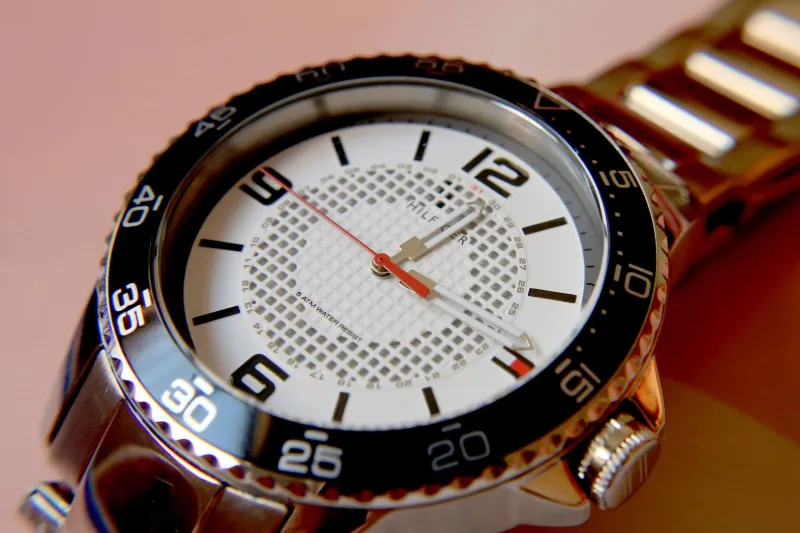
A clock face offers a more useful model. The hour hand moves slowly and cumulatively; its progress is easy to miss until enough time has passed. The minute hand moves quickly, responds to the immediate moment and gives the hour hand its visible proof. Neither hand tells the time alone. The practical question for UK agencies and clients is not whether to prioritise long or short games, but how to keep both hands moving without one stalling the other.
Why UK Teams Set Two Clocks
The separation is often structural rather than strategic. Annual brand plans sit with marketing leadership, quarterly campaign calendars sit with channel teams, and agency scopes are frequently written around one or the other. Budgets reinforce the split. Brand investment is treated as a fixed cost to be defended; campaign spend is treated as a variable cost to be optimised. Approval processes follow the same divide, with brand work passing through one set of gates and campaign work through another.
This is understandable. UK businesses face genuine short-term pressures: trading periods, regulatory deadlines, competitor activity and the constantly shifting signals of consumer confidence. But when the two clocks are never synchronised, the organisation loses the ability to see how one hand affects the other. A campaign can deliver a strong minute-by-minute result whilst quietly eroding the distinctive assets that made the brand recognisable in the first place. Equally, a brand programme can be meticulously planned and still fail to influence the commercial decisions that determine whether it survives.
The dual dial model does not ask UK teams to abandon short-term discipline. It asks them to recognise that the minute hand and the hour hand are connected by the same mechanism.
The Hour Hand: Cumulative Brand Work
The hour hand is the work that compounds. It includes distinctive brand assets, consistent verbal and visual codes, long-run sponsorship or partnership platforms, and the slow accumulation of meaning around a category position. In UK markets, this work often has to survive changes in marketing leadership, shifts in agency roster and the temptation to refresh for refreshment's sake.
Good hour-hand work has three characteristics. First, it is specific enough to be recognised without the logo. Second, it is durable enough to survive a change of campaign message. Third, it is measurable through leading indicators rather than immediate sales alone. Those indicators might include prompted brand recognition, attribute association, share of search, or the consistency with which distinctive assets appear across touchpoints. None of these replaces commercial metrics, but they help UK teams see whether the hour hand is actually moving.
The risk with hour-hand work is that it becomes invisible precisely because it is slow. It can be cut first when budgets tighten, and it can be postponed indefinitely because no single quarter owns it. UK clients and agencies therefore need to give it a protected rhythm: a standing review cadence, a named owner and a clear link to the commercial strategy it is meant to support.
The Minute Hand: Responsive Campaign Work
The minute hand is the work that answers the moment. It includes seasonal campaigns, product launches, reactive social activity, retail promotions and tactical responses to cultural or competitive events. In the UK, this work is shaped by a dense calendar: the Christmas trading period, the January reset, the spring statement, the summer events season and the autumn budget cycle, alongside sector-specific moments in retail, finance, travel and public services.
Minute-hand work is not lesser work. It is how the brand becomes visible and useful in ordinary life. It pays for the hour hand by generating attention, revenue and organisational confidence. But it is also where drift enters most easily. A campaign can be effective in the short term whilst using a visual or verbal language that has little to do with the brand's long-term codes. Over time, the minute hand starts telling a different time from the hour hand.
The practical test is not whether a campaign is tactical. It is whether the campaign is tactical and recognisably ours. A seasonal promotion can still use the brand's distinctive assets. A reactive post can still sound like the brand. A product launch can still reinforce the category position rather than inventing a new one for the duration of the flight.
Briefing Both Hands in One Document
One of the simplest ways to prevent the hands from stalling is to connect the briefs without merging them. A dual-track brief can set out two layers: the campaign objective and the brand contribution. The campaign objective describes what the minute hand must achieve in the immediate term. The brand contribution describes which distinctive assets, codes or associations the work must carry forward.
This is not a request for every campaign to do everything. It is a request for every campaign to know what it is doing for the hour hand. In practice, the brand contribution might be as modest as using the correct photographic treatment, repeating a known sonic signature or maintaining a consistent tone of voice. The point is that the contribution is named before the work begins, not reconstructed afterwards in a post-rationalisation document.
UK clients can strengthen this by aligning approval timings. If brand work is reviewed annually and campaign work is reviewed weekly, the two hands will rarely meet. A monthly or quarterly brand check-in, even a short one, gives campaign teams a route to raise tensions before they become inconsistencies.
Evaluation at Different Cadences
The hour hand and the minute hand should not be judged by the same scorecard. Minute-hand work can be assessed against reach, response, conversion and trading impact over days or weeks. Hour-hand work needs a longer window and a different set of measures: consistency, recognition, association and the degree to which campaigns are reinforcing rather than fragmenting the brand.
The error is to use short-term metrics to judge long-term work and then conclude that the long-term work is failing. A brand programme may not move sales in its first quarter, but it may be improving the quality of attention that later campaigns receive. Equally, a campaign may hit its short-term targets whilst increasing the cost of future brand communication by making the brand harder to recognise.
A useful UK discipline is to review both hands at the same meeting, even if they are measured differently. This keeps the trade-offs visible. It also makes it harder for either hand to be quietly abandoned.
UK Checks Before the Hands Stall
Before the next planning cycle, UK agencies and clients can ask a small set of practical questions. Does the campaign brief name the brand assets it will use? Does the brand programme have a commercial sponsor as well as a marketing sponsor? Are campaign approvals timed so that brand consistency can be checked without slowing delivery? Is there a shared scorecard that shows both immediate response and cumulative recognition? And when a campaign is retired, is there a plan for what it leaves behind for the hour hand?
As UK teams move through the 2026 Christmas trading period and into 2027 planning, these questions are more useful than another debate about long versus short. The answer is not to choose a hand. It is to build a mechanism in which both can move, at their own speed, without ever losing the same time.